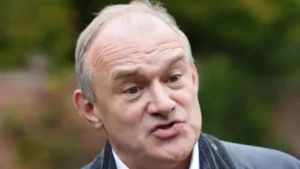

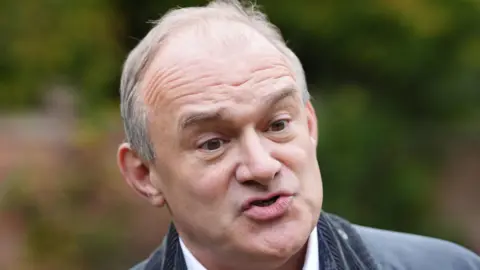
In a significant move, Sir Ed Davey, the leader of the Liberal Democrats, has raised concerns regarding potential delays to local elections in England. He asserts that if these delays are implemented, nearly ten million citizens could find their democratic right to vote infringed upon. Sir Ed articulates his alarm in a letter addressed to the Equalities and Human Rights Commission (EHRC), requesting an investigation into what he terms the government’s “cavalier approach” toward the electoral process.
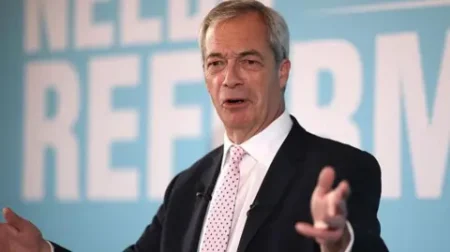
The backdrop to these concerns stems from the UK government’s recent indications that it would consider postponements to local elections, especially at the request of councils struggling to organize elections amidst substantial local government reforms. Sir Ed’s fears resonate with criticism from other political entities, including Zia Yusuf from Reform UK, who characterizes these proposed delays as “extremely dangerous.” Yusuf additionally announced that his party would pursue a parliamentary vote to counter these measures.
According to the government’s stated rationale, certain councils have expressed hesitance about incurring expenses for elections that might soon eliminate their roles due to the planned overhaul of local governance. Defending the decision to allow potential delays, Downing Street declared that any postponements would not only be temporary but also lawful, thereby ensuring councils provide exceptional justification for cases needing deliberation.
The current plans proposed by the government signal the most extensive reorganization of local governance in over fifty years—aiming for a mayor in every region and reducing the complexity of dual local authority structures by the year 2028. Specifically, in February, it was communicated that nine regions could have their elections pushed from 2025 to 2026 to adequately prepare for these changes.
As of late, Local Government Minister Alison McGovern has acknowledged that several councils had sought postponements of the upcoming elections scheduled for May 2026. Among these, Hastings and regions across East and West Sussex confirmed requests for delays, while additional councils expressed that they would deliberate on the matter in the upcoming year.
In his correspondence with the EHRC, Sir Ed references Article 3 of the First Protocol of the Human Rights Act, which enshrines the right to free elections. He emphasizes the gravity of potentially removing elections altogether before the mandated timing, highlighting a possible infringement on democratic rights. The Lib Dem’s home affairs spokesperson, Lisa Smart, echoed these sentiments during an interview with BBC Radio Four, questioning the motivations behind the delays suggested by some councils, suggesting it might be an attempt to manipulate the outcome of elections by delaying them.
The looming elections promise to be pivotal moments in the political landscape. Reports indicate that the results of these elections may influence leadership roles both within the Labour Party, led by Sir Keir Starmer, and the Conservatives, under Kemi Badenoch. In the context of the projected electoral shifts, Reform UK plans to introduce a Private Members’ Bill aimed at compelling the government to proceed with May elections, though the implementation of such a bill is unlikely.
Citing the urgency of voting rights, Zia Yusuf stated that many Conservative councillors are “illegitimately squatting” in their positions without allowing voters the chance to exercise their rights. Of the 63 councils considering a delay, Labour presently dominates 18, whereas the Conservatives govern nine and seven under the Liberal Democrats.
Despite this, the Conservatives face significant pressure, as they are up for reelection in the largest number of seats—610—of which more than a quarter was initially slated for votes in May. Citing apprehension about voter backlash, Conservative leader Badenoch indicated an unwillingness to obstruct councils’ requests for deferral while still advocating for the elections to occur as planned.
Adding to the mix, Green Party peer Baroness Jenny Jones opined that allowing these delays could enable Labour councils to avoid significant losses come election time while also giving Conservative administrations more duration in office amid growing discontent.
Moreover, the Electoral Commission has expressed worry regarding the implications of any postponements. Their chief executive, Vijay Rangarajan, pointed out a “clear conflict of interest” in permitting incumbent councils to determine their accountability length to voters. Meanwhile, the government has rebutted comments from the Commission, stating that the approach remains locally guided, thereby granting councils the discretion to address their own electoral challenges.
In summary, the escalation of concerns about election delays in England has generated considerable political discourse and controversy. This situation underscores ongoing tensions surrounding democratic governance and the electoral process, raising critical questions about representation and the preservation of voting rights amidst forthcoming local government reforms.