


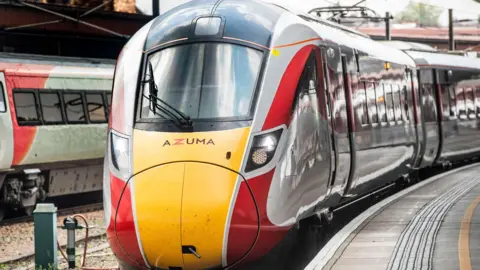
The recent revamp of train timetables has marked a significant transformation within the UK’s rail network, introducing arguably the most considerable changes in the past seven years. Effective immediately, these changes have been anticipated by many commuters and stakeholders alike, as rail operators promise enhanced services and faster journey times, particularly benefiting key routes such as the East Coast Main Line.
As the changes come into play, passengers are strongly encouraged to consult the new timetables before embarking on their journeys. It’s vital for commuters, especially those who might rely on specific service timings, to be aware of the revisions. Such a level of alterations has not been witnessed since May 2018, a period known for its tumultuous consequences when a previous update led to widespread disruptions and cancellations on a multitude of routes.
Train timetables usually undergo updates biannually in May and December; however, the extent of the current modifications stands out as particularly notable. According to reports, Network Rail has made commitments to not only faster travel times but also significant increases in daily seat availability, attributing improvements to a substantial £4 billion investment made over the last decade.
Key adjustments include the shortening of journey durations, with a notable decrease of 15 minutes on routes between London King’s Cross and Edinburgh, as well as a 10-minute reduction between Edinburgh and York. These enhancements will foster improved connectivity among Scotland, North East England, Yorkshire, and London, ultimately benefiting both regular commuters and occasional passengers.
Among the eager participants in these changes is LNER, which has dubbed the revamp “transformational,” asserting that it will facilitate the addition of 10,000 extra services each year. Ellie Burrows, the Eastern regional managing director for Network Rail, articulated the industry’s preparation spanning several years for this new timetable. She emphasized the importance of collaboration to realize the long-term benefits of this alteration, the largest seen in over a decade.
Alongside the advancements in the East Coast Main Line, a new hourly fast service connecting Leeds to Sheffield has emerged, courtesy of Northern Rail. Transport for Wales has announced expanded offerings for routes leading to Chester, Wrexham, and Swansea. Additionally, Avanti will be rolling out an increased frequency of services between London and Liverpool.
That said, the revamp doesn’t come without some cuts; Avanti has reduced the frequency of trains between Blackpool and London from four services to two. Such reductions illustrate the balancing act that rail operators must perform to optimize service efficiency while accommodating demand variations.
The current reforms have drawn comparisons to the disastrous changes of May 2018, during which the Govia Thameslink Railway and Northern networks experienced severe operational challenges. On occasions, cancellations peaked at 470 for GTR and 310 for Northern, prompting a comprehensive review and instigating government-led restructuring into the formation of Great British Railways, thereby bringing the industry under state control.
Simon Calder, a travel expert, expressed confidence that such chaos would not be replicated with the present updates. He highlighted the extensive planning and consideration implicated in the current changes, asserting that the objective is to maximize the potential capacity from the UK’s Victorian-era rail system without compromising reliability. Fellow rail industry expert Tony Miles remarked on the pitfalls encountered in 2018, advocating for the necessity of a buffer – or “wriggle room” – to ensure that the system maintains resilience during particularly busy periods.
In conclusion, while the success of these timetable changes remains to be fully evaluated, the industry is bracing for what is expected to be a critical test on Monday morning when the new system goes into effect amidst peak commuting times. The careful planning behind these revisions showcases a concerted effort to enhance travel efficiency and reliability, reflecting hopes for a positive shift in the rail service landscape.