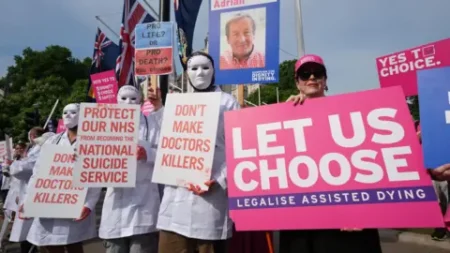



On Friday, a crucial parliamentary vote will take place regarding an assisted dying bill, marking one of the most profound decisions that Members of Parliament (MPs) will face in their careers. The proposed legislation aims to grant certain terminally ill individuals in England and Wales the autonomy to end their lives at a time of their choosing, a subject that has generated intense debate and controversy within the political arena.
With numerous MPs seeking to understand an array of perspectives on the bill, hundreds have dedicated time to examine the evidence, ethical dilemmas, and emotional implications of such legislation. Among those grappling with their decisions are MPs Dan Tomlinson, Jess Asato, Rebecca Paul, and Catherine Fookes, who have shared their personal reflections with the media. Tomlinson, a Labour MP representing Chipping Barnet, expressed his profound sense of responsibility to thoroughly contemplate this complex issue, especially as the vote approaches.
The atmosphere in Parliament regarding the assisted dying bill remains uncertain, as many MPs have chosen to keep their voting intentions private. The unique nature of this vote allows MPs to act according to their individual beliefs rather than adhering strictly to party lines. This freedom brings a heightened sense of accountability concerning their choices and the impact those choices may have on the lives of their constituents.
Typically, MPs gauge their constituents’ sentiments through communication channels such as emails, public discussions, and regular meetings. However, the gravity of the assisted dying bill has led to deeper personal reflections. Tomlinson articulated the need for politicians to not shy away from tackling difficult societal questions, indicating that the debate surrounding assisted dying requires a blend of emotional intelligence and political courage.
In the buildup to the vote, Tomlinson has engaged with his constituents by attending town hall meetings, allowing him to hear firsthand from both proponents and opponents of the bill. During one such gathering at Finchley Reform Synagogue, attendees listened to various experts present arguments for assisted dying. The meeting underscored the emotional weight of the discussion, with concerns raised about how the law could possibly pressure individuals to choose death to alleviate perceived burdens on their families or the healthcare system.
Asato, another Labour MP, emphasized the importance of public engagement in understanding the collective sentiment surrounding the bill. She held her own public meetings in Lowestoft, where passionate arguments were presented both for and against the proposed legislation. During one debate, applause erupted as a terminally ill man expressed his desire for a peaceful end to his life. These public interactions have made Asato more aware of the responsibilities she bears towards her constituents.
For Conservative MP Rebecca Paul, the upcoming vote has also sparked intense personal reflection. Through consultations and private discussions about the bill’s implications, including insights from medical professionals, she voiced concerns about the ability to accurately determine a patient’s prognosis in the context of assisted dying. The inherent uncertainties around such predictions have prompted her to take a more cautious stance.
Finally, Catherine Fookes, a Labour MP for Monmouthshire, shared her own life experiences as a catalyst for her support of the bill. Reflecting on her father’s struggle with a terminal illness, she argued for the necessity of legislative change to afford individuals the option of a dignified death, free from prolonged suffering.
While decisions among the MPs vary, it has become increasingly clear how intricately personal experiences and ethical considerations intertwine with their legislative responsibilities. As the day of the vote approaches, the diversity of perspectives highlights the complexity of the assisted dying bill and the enduring challenge of addressing such sensitive issues in public life. As the parliament prepares to cast their votes, the outcomes remain nascent, but the ramifications of their decisions will undoubtedly leave a significant mark on the future of assisted dying legislation in the UK.