


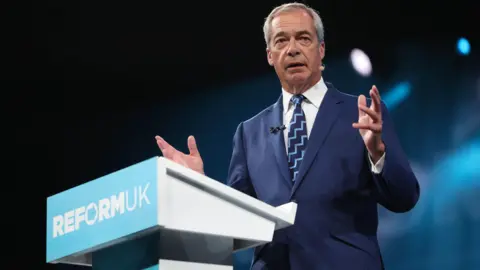
In a striking development in British politics, Reform UK has declared that it now boasts a greater membership than the Labour Party, a claim that could signal a significant shift in the political landscape. According to information published by the Times newspaper, Labour’s membership has reportedly dipped below the 250,000 mark, while Reform UK asserts its membership has surged to over 268,000. This increase suggests that the right-wing party may have surpassed Labour to become the largest political party in the United Kingdom based on membership numbers.
As of now, Labour has chosen not to respond to these membership figures, emphasizing that any updates will be available in the party’s forthcoming annual report. Political analysis indicates that there is no stringent requirement for political organizations in the UK to disclose their membership stats, and as such, these numbers are not independently verified by external institutions. Instead, Reform UK controls its membership tracking through a real-time online counter, which reflects only those members who have paid their annual dues, which are priced at £25, or a discounted fee of £10 for younger members under 25.
Reform UK, led by the notable politician Nigel Farage, claims this milestone as a pivotal moment in their strategy to take on the electoral landscape in the next election. Farage highlighted the point that the traditional two-party political system in the UK seems to be nearing its end, suggesting that the emergence of Reform UK is indicative of a broader shift in voter alignment and public sentiment.
Since the appointment of Sir Keir Starmer as the leader of the Labour Party in April 2020, the decline in Labour’s membership has been notable. Publicly available data reflects that the party’s strength peaked at over 530,000 members during Jeremy Corbyn’s leadership before significantly dwindling to around 333,235 by 2025. Recent reports indicate that this decline persisted, with Labour losing upwards of 37,000 members through 2024. Furthermore, the LabourList website has been tracking these trends and suggests the current membership could now be close to the previously mentioned 250,000 threshold.
In response to the increasingly dire situation regarding membership numbers, a Labour spokesperson remarked that the party maintains transparency about its membership figures through annual reports and does not engage in continuous commentary regarding figures throughout the year. Membership fees are varied, generally set at standard levels of £70.50, with reduced rates available for specific demographics.
In light of Labour’s struggles, various organizations, including the new campaign group known as the Mainstream Network, which features supporters of prominent figures like Manchester Mayor Andy Burnham, have voiced the need for Labour to cultivate a grassroots movement to effectively confront far-right ideologies in the UK. Their position advocates for a more democratized and member-empowered party structure, reflecting desires for a bottom-up approach rather than a centralized control model.
Interestingly, alternatives to Labour have gained traction elsewhere. For instance, the Green Party noted a significant spike in membership since the arrival of its new leader Zack Polanski, witnessing their numbers rise from approximately 70,000 to over 180,000. Meanwhile, the Conservative Party has yet to regularly publish its membership figures, although it recently reported a decrease from 131,680 eligible members for the previous year’s leadership election to around 123,000.
The Liberal Democrats are also facing a decline, with memberships nearly cut in half over the last five years to an estimated 60,000 members. Furthermore, a new left-wing political initiative, Your Party, co-founded by Jeremy Corbyn and Zarah Sultana, claims to have enrolled 55,000 paying members.
Ultimately, the current political climate is witnessing noteworthy changes as membership figures reflect shifting allegiances among the British electorate. The developments concerning Reform UK’s membership reveal not only internal struggles within the Labour Party but may also suggest a changing narrative about representation and political engagement in the UK. It will be crucial to monitor how these dynamics evolve as the next general election approaches and what strategies the parties will employ to engage and retain their respective bases amidst these shifts.