



In recent months, retail sales across the nation have experienced a surprising downturn, largely attributed to consumers adopting a more cautious approach to spending ahead of the annual Budget announcement. According to the Office for National Statistics (ONS), the latest data indicates that retail sales volumes fell by 0.7% in October, marking a more substantial decline than analysts had anticipated. Particularly notable was the performance of clothing stores, which reported a significant slump in sales activity.
The cautiousness exhibited by households and businesses has been largely informed by the speculation surrounding potential tax increases that could be implemented following the latest Budget discussions. As families braced for possible financial adjustments due to forthcoming taxation changes, retailers witnessed a notable reduction in consumer spending behavior. Despite this downturn in October, it is essential to recognize that broader trends did reveal a stable trajectory of sales for the retail sector in previous months.
When examining a broader time frame, the data reflects a 0.8% increase in sales volumes between August and October compared to the prior three-month period. This figure suggests that while October was a particularly challenging month, the retail environment has demonstrated resilience when assessed across longer intervals. ONS senior statistician Hannah Finselbach articulated that the recent data showcases ongoing increases in retail sales across both the three-month and annual measures, even though the numbers remain below pre-pandemic standards. She emphasized that various retailers experienced a distinct decrease in consumer engagement, specifically referencing the poor results from clothing stores as a significant contributor to the overall decline.
Sales results from clothing stores were particularly alarming, with figures indicating a 3.1% drop in sales during October. Some reports indicated that milder weather conditions may have influenced consumer behavior, as shoppers may have chosen to delay purchasing warmer clothing items. Furthermore, the current retail sales numbers contribute to a series of disappointing economic indicators, including elevated government borrowing levels and inflation rates that are rising faster than anticipated. Just last week, reports revealed that the economy exhibited minimal growth between July and September, signaling potential instability.
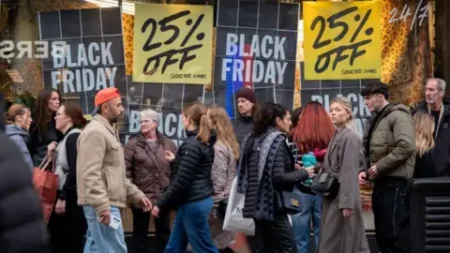
In response to the unease reflected in the retail data, Jacqui Baker, the head of retail at RSM UK, expressed concern regarding the downward trend, especially with the festive season approaching. The holiday shopping period is traditionally identified as a peak time for retailers, making these figures particularly troubling as the industry braces for Christmas sales. Baker noted that the timing of the half-term holiday and relatively mild autumn weather had prompted consumers to delay purchasing items such as winter coats and boots. This trend has constrained retailers’ ability to move inventory effectively, especially as many are strategically holding back on spending in anticipation of Black Friday sales.
Nonetheless, there is a glimmer of optimism for the retail sector as Baker suggested that with the latest Budget behind them and the prospect of declining interest rates, retail confidence could see a boost. This could facilitate a more favorable environment for consumer spending, particularly as Christmas approaches. As the year draws to a close, retailers will be keenly observing consumer behavior to determine how best to navigate this season of high demand amidst various economic pressures.
In conclusion, while the retail landscape in October presented challenges with a significant decline in sales, the overall trajectory of the industry appears to be resilient. Various influences, including economic conditions and consumer sentiment linked to government fiscal policies, will continue to play a critical role as businesses prepare for the crucial festive trading period ahead.