


**Ukraine Surrenders Eastern Stronghold of Siversk Amid Renewed Russian Offensives**
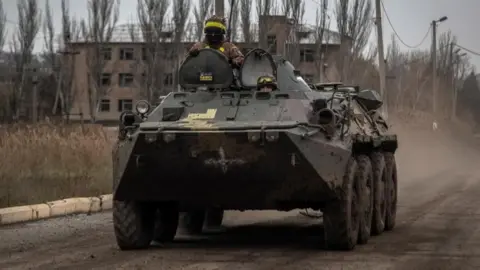
Ukrainian forces have recently withdrawn from the embattled town of Siversk, marking a significant shift in the ongoing conflict with Russian troops. This decision, taken by the Ukrainian military, was motivated by the need to protect soldiers’ lives and maintain the combat readiness of their units amidst the overwhelming numerical superiority of Russian forces, who have gained a “significant advantage in manpower”.
The loss of Siversk is not merely a tactical setback; it also brings Russia closer to capturing key cities still held by Ukrainian forces, such as Sloviansk and Kramatorsk. Both of these cities are critical components of what is often referred to as the last remaining “fortress belt” in eastern Ukraine, particularly within the industrial Donetsk region.
The capture of Siversk comes against a backdrop of escalating violence across Ukraine, with authorities reporting widespread destruction caused by a recent wave of overnight drone and missile attacks attributed to Russian military actions. Tragically, this bombardment claimed the lives of three individuals, including a young child, further highlighting the dire humanitarian crisis unfolding in the region.
Since the onset of full-scale aggression in February 2022, Russia has succeeded in seizing control of approximately 20% of Ukrainian territory, and the situation is particularly pronounced in the eastern provinces of Donetsk and Luhansk — together known as Donbas — where Russian troops maintain significant ground. Moscow’s military hierarchy, spearheaded by President Vladimir Putin, insists that Ukrainian troops must completely retreat from Donbas to avoid complete annexation, rejecting any form of negotiation that allows for compromise.
As the conflict intensifies, Ukrainian President Volodymyr Zelensky has faced immense pressure, notably from U.S. counterparts, including former President Donald Trump, to consider ceding Donbas territories to Russia as part of broader peace talks. However, Zelensky has consistently refused to make any territorial compromises, demanding robust security guarantees for Ukraine as a stipulation of any potential resolution.
Current negotiations are complicated further by the recent launching of a Russian drone strike campaign that has focused on crucial infrastructure and military targets throughout Ukraine. Reports indicate that Russian forces executed an extensive aerial attack, deploying 635 drones and 38 missiles across several regions, of which over 600 were intercepted by Ukrainian air defenses. The Ukrainian state’s emergency services reported casualties from such strikes, including elderly and young victims.
In the aftermath of these assaults, local authorities have expressed concerns over the anticipated winter weather, warning residents about energy shortages amid widespread blackouts. Ukraine’s energy minister highlighted that this marks the ninth significant assault on the nation’s energy framework this year, leading to near-total power failures in several regions.
Additionally, the broader psychological impact of the prolonged conflict has been palpable for civilians living near the front lines, such as in the city of Zaporizhzhia. Residents report experiencing a pervasive sense of instability, evidenced by disrupted routines and constant alerts about potential incoming strikes.
As tensions between Russia and Ukraine continue to escalate, residents are left grappling with the realities of daily life amidst conflict, forcing many to adapt to a new normal characterized by fear, uncertainty, and crippling power shortages. The situation remains fluid, with significant developments anticipated in both military and diplomatic arenas as peace talks unfold, potentially impacted by the outcomes of ongoing battles in crucial regions such as Siversk and the larger Donetsk area.