

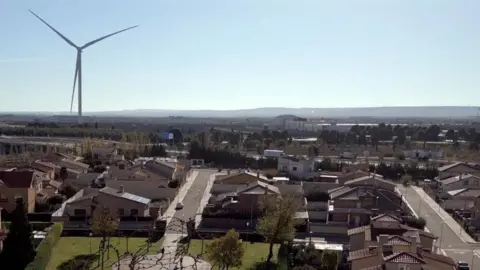
Spain has long been recognized as a frontrunner in the renewable energy sector, prominently featuring wind and solar power as key components of its electricity generation. However, recent developments have raised questions about the sustainability and reliability of Spain’s green energy commitment. In the sleepy town of Figueruelas, a vast wind turbine silently spins, symbolizing the region’s significant investment in renewable energy. Situated in the autonomous community of Aragón, northeastern Spain, Figueruelas is home to multiple wind and solar farms, contributing to the nation’s impressive energy output.
This sleepy town’s status is poised for a transformation, thanks to a new electrifying project. Chinese battery manufacturer CATL, in partnership with Dutch automotive giant Stellantis, is investing a staggering €4bn (approximately $4.7 billion) in constructing a gigantic electric vehicle battery factory nearby. This move not only underscores the town’s potential as a hub for green energy but also indicates the critical role renewable resources, like wind and solar, will play in powering this manufacturing facility. Mayor Luis Bertol Moreno emphasizes the area’s strategic advantages—year-round wind and ample sunshine—which make it an ideal location for such a factory.
In retrospect, Spain’s renewable energy commitment reflects a marked evolution over the last several years. In 2017, renewable energy accounted for roughly one-third of the national electricity output. By last year, that figure surged to 57%, with an ambitious target of reaching 81% by 2030 set by the government. Prime Minister Pedro Sánchez has been a vocal advocate for this green agenda, notably contrasting the rhetoric of past pro-fossil fuel policies with his call to encourage renewable energy.
However, Spain’s seemingly steadfast commitment to renewables faced scrutiny following an unprecedented blackout on April 28, when Spain and neighboring Portugal plunged into darkness for hours. This outage sparked fierce political debates regarding the country’s energy strategy, with opposition leader Alberto Núñez Feijóo attributing the incident to an over-reliance on renewable sources. Critics argue that decisions reflecting “fanaticism” towards renewable energy may jeopardize energy reliability.
The discourse intensified with the stark statistics surrounding solar energy generation in Spain, which recently reached a record 61.5% of the national electricity mix. In spite of this remarkable feat, the government and the national grid operator Red Eléctrica denied any correlation between the blackout and the surge of renewable energy production, asserting that they had successfully operated under higher renewable rates previously without incident.
Reports on the blackout are still pending, with officials attributing the failure to a mix of unidentified electrical issues rather than a failure in renewable resource management. The discussion surrounding the blackout has resulted in shifting energy policies, now incorporating a greater reliance on natural gas to ensure stability.
Another contentious element in Spain’s energy mix is the future of nuclear power. The current government plans to phase out all five operational nuclear plants between 2027 and 2035, a move met with significant pushback from the nuclear industry, which argues for the continued role of nuclear energy in ensuring stable and low-carbon electricity generation amid the growing demand for renewables. Ignacio Araluce, representing nuclear interests, argues for a balanced approach that includes both renewables and nuclear energy to meet the country’s carbon reduction goals.
As Spain’s energy landscape continues to evolve amidst political uncertainties and the challenges of meeting ambitious sustainability targets, the future of its renewable commitment remains to be seen. Local communities like Figueruelas, however, are benefiting from the influx of investments and expertise associated with expanding renewable energy solutions. The promise of job creation as part of new energy projects could revitalise smaller towns, potentially offsetting some concerns with Spain’s energy strategy as a whole. Thus, while Spain’s renewable energy commitment appears steadfast, the complexities and contradictions of its energy policy may shape the trajectory of its renewable renaissance in the years to come.