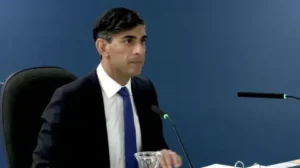

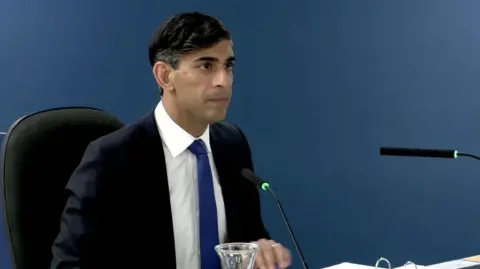
In a recent public inquiry regarding the government’s response to the Covid-19 pandemic, Rishi Sunak, the former Prime Minister and Chancellor during the crisis, addressed several aspects of the emergency measures implemented to combat mass unemployment. He acknowledged that it was not possible to save every job, yet he emphasized the government’s success in preventing widespread unemployment during a time of unprecedented economic shock.
Sunak proclaimed that although the situation was dire and predictions tended to be pessimistic, the actual impact on employment turned out to be noticeably less severe than what was initially anticipated. He noted that the lack of a comprehensive “playbook” or prior experiences to guide the government’s response made the situation particularly challenging. According to Sunak, officials had to address an economic disruption of an entirely different nature and scale, which they were not adequately prepared for.
In his testimony, Sunak described the early stages of the pandemic as fraught with uncertainty. Decision-makers were grappling with not only the scale of the virus but also the potential duration of its effects and the popular response to governmental measures. He underscored that there was no established toolkit for managing a pandemic, unlike responses available for previous economic or financial crises. This lack of precedent necessitated improvisation and swift action, particularly given the fast-evolving nature of the crisis.
During the inquiry, Sunak expounded on the critical importance of a timely response to the impending economic fallout. He hesitated to label any specific decisions as errors, cautioning against the hazards of hindsight. The former Chancellor noted that the original furlough scheme was created quickly to prevent a surge in unemployment due to the government’s lockdown measures. His words reflected an earnest understanding that while not every job could be saved, significant effort was made to protect living standards, especially for the most vulnerable segments of society.
In terms of policy development, Sunak mentioned the government’s attempt to create a more targeted version of the furlough scheme that ultimately did not see implementation due to the rapid unfolding of events. He conveyed that the Treasury invested considerable time and resources in drafting an alternate strategy called the Jobs Support Scheme, yet its rollout was rendered moot by subsequent lockdowns. This underscores the sense of urgency that characterized the government’s decision-making process as they navigated unprecedented circumstances.
Reflecting on criticisms regarding the length and details of the furlough scheme, Sunak urged caution when discussing past decisions, explaining the challenges faced in the moment. He maintained that wisdom should guide future responses to similar emergencies, even as it remains unclear how much learning from such an experience could be applied effectively again.
In relation to self-employed individuals, the former Chancellor acknowledged the complexities involved in supporting this sector amidst the crisis, as applicants were required to self-certify for assistance. He expressed a commitment to support self-employed workers, affirming he would undertake similar measures if presented with the same circumstances.
Over the course of the inquiry, which has also featured testimonies from former ministers and central banking officials, one stark discovery was that in the early days of the pandemic, governmental action lagged, leading COVID-19 to be taken less seriously than necessary for swift intervention. This loss of the initial month in February 2020 highlighted the importance of timely decision-making in crisis periods.
In summary, Sunak’s testimonies reflect a complex, multifaceted grappling with a crisis without precedent. The responses, while imperfect, evidently aimed to secure not just immediate financial assistance but also long-term economic stability for the populace during one of the most challenging periods in recent history. The inquiry continues to evaluate the lessons learned from the government’s approach to navigate the economic consequences of the pandemic.