
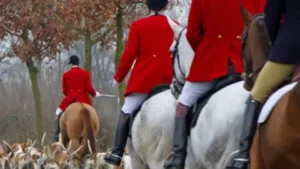


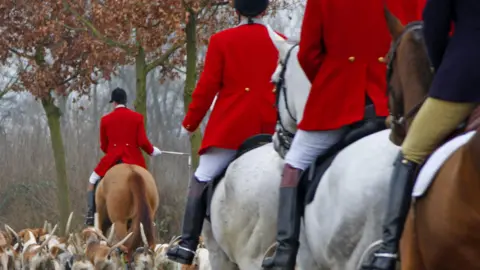
In a significant shift in animal welfare legislation, the practice of trail hunting is set to be banned in England and Wales. This action is part of a broader animal welfare strategy being unveiled by the government, with the announcement expected to be officially released on Monday. For context, trail hunting involves setting a scent trail for hounds to follow, ostensibly to mimic traditional hunting without the actual pursuit of live animals. This practice has been controversial, especially since it has persisted since the implementation of a ban on traditional hunting in 2004, due to its technicality of not directly involving the killing of wildlife.
The government has cited its commitment to outlawing this practice as part of its manifesto, framing trail hunting as a ruse used by hunters to engage in the pursuit of wild animals covertly. In contrast, various hunting and countryside organizations have labeled the ban as unwarranted and potentially detrimental to rural economies and communities. They argue that the trail hunting tradition plays a vital role in local culture and contributes economically to rural landscapes.
Hunting with hounds has been a practice deeply embedded in UK traditions for centuries. However, the Hunting Act of 2004 enacted strict regulations that prohibited the use of dogs to hunt wild mammals, such as foxes, hares, deer, and mink, leading to modified practices like trail hunting. In this modified activity, participants lay down a rag soaked in animal scent, allowing the hounds to chase it, thus attempting to capture the essence of a wild hunt without the intention of harming any animals.
Despite the argument presented by anti-hunting groups such as the League Against Cruel Sports—who reported nearly 1,600 incidents of perceived illegal hunting, including 397 instances where foxes were allegedly chased—hunting advocates believe that revisiting the legality of trail hunting is unnecessary. Tim Bonner, chief executive of the Countryside Alliance, expressed his disbelief over the government’s desire to spend parliamentary resources on an issue they feel was resolved two decades ago, namely under Labour government guidelines.
Furthermore, Bonner emphasized that the government’s renewed focus on hunting legislation is an unwise move, especially as the Labour party has historically been criticized for its approach to rural constituencies and family farms. Rural stakeholders voice concerns that adjustments to hunting laws perpetuate the notion that policymakers are out of touch with countryside priorities.
Supporters of trail hunting have reiterated its importance in supporting rural economies and mental well-being, contributing significant income to local communities while promoting a sense of belonging among participants. A farmer was quoted saying that expressing opposition to hunting could lead to social ostracism within their community, highlighting the strong cultural ties to this practice.
As the ban begins to take shape, it will be detailed further in a consultation set for the new year. Baroness Hayman, the minister for animal welfare, reiterated the commitment to follow through with the ban, emphasizing that trail hunting has increasingly become a cover for illegal hunting of wildlife. Critics of the legislative changes include Conservative chairman Kevin Hollinrake, who labeled the ban an attack on rural values, expressing concern over punishing responsible participants in trail hunting.
Others, such as Reform UK leader Nigel Farage, have accused Labour of draconian tendencies, suggesting that the proposed ban reflects a broader authoritarian approach. While trail hunting faces prohibition in England and Wales, it remains permitted in Northern Ireland, with Scotland having already outlawed the practice.
As the discussion on hunting regulations evolves, it reflects wider debates about urban versus rural dynamics, animal welfare, and the future of longstanding traditions in British society.