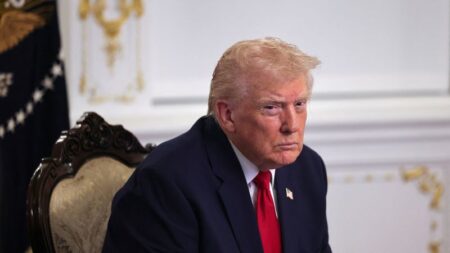



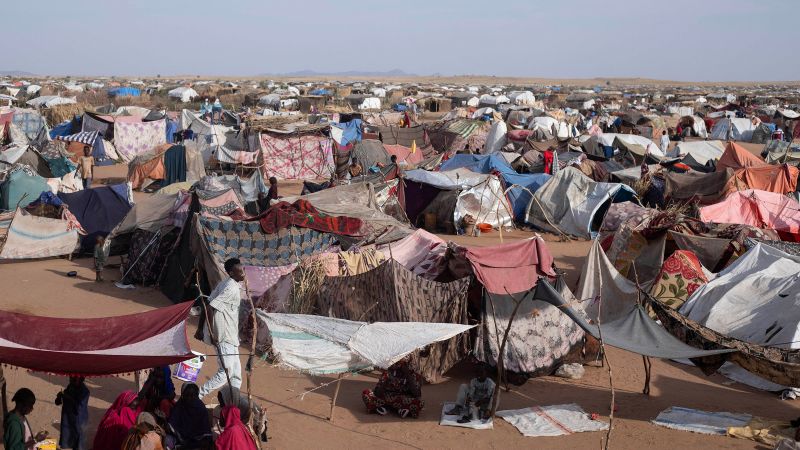
The ongoing conflict in Sudan has drawn significant attention, particularly with President Donald Trump’s recent commitment to use the influence of the presidency to work towards bringing an end to the war that has been ongoing for over two years. The United Nations High Commissioner for Refugees has indicated that this brutal civil war has led to the displacement of nearly 12 million individuals, marking it as one of the largest humanitarian crises in the contemporary world. This heightened awareness and international concern reflects an urgent call to action amidst a deteriorating situation.
In a recent statement, Trump expressed a newfound willingness to engage in the Sudan issue, a shift from his earlier stance where he stated it was not on his agenda to get involved. This change was notably precipitated by a personal appeal from Saudi Crown Prince Mohammad bin Salman, highlighting the interconnected nature of geopolitical relationships and the role of diplomacy in conflict resolution. At an event where he stood alongside the Saudi leader in Washington, D.C., Trump articulated the significance of the matter to his audience, saying, “I just see how important that is to you and to a lot of your friends in the room.” His declaration has generated both cautious optimism and skepticism among experts regarding the potential for a resolution to the crisis.
The conflict, primarily between the Sudanese Armed Forces (SAF) and the paramilitary Rapid Support Forces (RSF), has been characterized by widespread atrocities, resulting in tens of thousands of deaths and drawing accusations of war crimes from the United States. The Biden administration has specifically labeled the RSF’s actions as genocidal. The situation has warranted coordinated international efforts aimed at brokering peace in Sudan, with the U.S. collaborating with Saudi Arabia, the UAE, and Egypt in a coalition known informally as “the Quad.”
Despite Trump’s newfound commitment, experts have expressed doubts about the ease with which peace can be achieved given the complexities and entrenched nature of the conflict. Cameron Hudson, an Africa analyst and former director for African Affairs on the National Security Council, noted Trump’s position as potentially impactful for short-term objectives. However, doubts linger regarding the U.S. administration’s actual strategy and the specific diplomatic avenues it would pursue. For instance, Sudan’s top military leader recently dismissed a proposed ceasefire, underscoring the persistent obstacles in the negotiations.
Concerns about external influences on the conflict have also surfaced, particularly the alleged support from the United Arab Emirates. There are calls for the U.S. to exert more pressure on the UAE, which is accused of supplying arms to the RSF, further complicating the dynamics of the war. Questions remain over Trump’s ability to leverage relationships with allies like the UAE, especially given the country’s involvement in the Abraham Accords—a significant foreign policy achievement for his administration.
Despite the geopolitical complexities, analysts believe that the Trump administration’s close relationships with regional powers such as Turkey, Egypt, Qatar, Saudi Arabia, and the UAE positions them to mediate more effectively among these external influences rather than directly with the combatting factions themselves. This perspective emphasizes the challenge of penetrating the tumultuous political landscape within Sudan while attempting to coordinate among allied nations.
While Trump’s rhetoric has been described as promising by some, including Jeffrey Feltman, a former U.S. special envoy, the urgent need for a tangible reduction in violence remains a dire priority. However, experts like security analyst Manal Taha warn that the conflict has escalated beyond a mere military confrontation between two generals. The underlying ethnic and tribal dynamics, coupled with a history of generational trauma, indicate that a simple ceasefire will not suffice to bring long-lasting peace to Sudan.
In summary, President Trump’s recent commitment to intervene in the Sudanese crisis represents a notable shift in U.S. foreign policy and engagement. Yet, both analysts and advocates for peace remain cautious, pointing to the multifaceted challenges posed by external influences, the entrenched nature of internal conflicts, and the necessity for a more defined strategy moving forward. The complexity of transitioning from rhetoric to substantive change in such a deeply polarized landscape underscores the pressing need for coordinated international efforts to bring about a resolution that acknowledges and addresses the humanitarian toll of the conflict.