



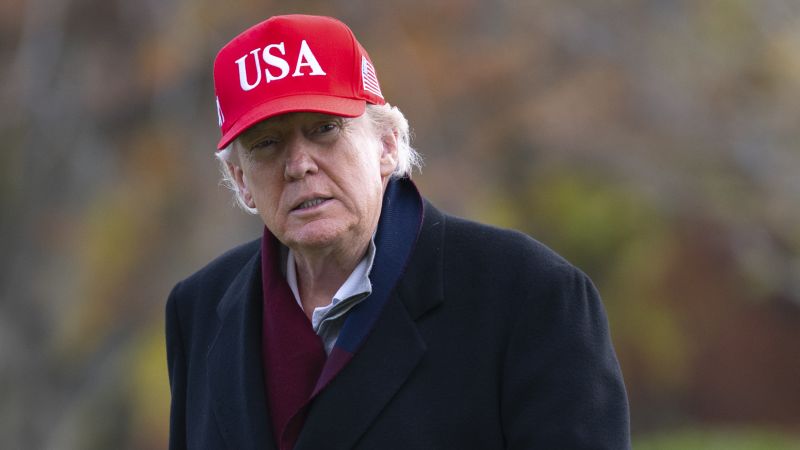
In a significant move to tackle mounting health care costs, President Donald Trump is set to unveil a new proposal aimed at mitigating the potential spikes in insurance premiums following the expiration of critical Affordable Care Act (ACA) subsidies. This announcement is anticipated as early as Monday, as reported by individuals familiar with the White House agenda. The urgency of the proposal comes in light of estimates suggesting that a substantial portion of the population—approximately 22 million people—relies on these enhanced subsidies, which Democrats are adamant about extending.
The backdrop to this announcement includes a protracted political struggle between the administration and Democrats, who have resisted efforts to reopen the government unless a clean extension of the ACA subsidies was secured. Republicans in the Senate have agreed to take a vote in mid-December on the continuation of these enhanced subsidies, which were originally included in a Covid-19 relief package under the Biden administration. The increase in such subsidies is viewed as crucial, with projections indicating that failure to extend them could lead to insurance premiums doubling for many Americans in the upcoming year, potentially pushing two million more individuals into the ranks of the uninsured, as per findings from the Congressional Budget Office.
Interestingly, Democrats are already strategizing on how to leverage the potential fallout from inaction on these subsidies for political advantage in the approaching midterm elections. The situation mirrors the 2018 midterms when Republican efforts to repeal the ACA were met with strong backlash, contributing to their loss of control in the House. Given these dynamics, Trump’s proposal aims not only to satisfy an immediate need but also to present a political counter to the Democrats.
As of now, the details of Trump’s proposal remain fluid, with the administration indicating that both the timing and content may change before the official unveiling. A senior White House official has stressed that until Trump himself makes an announcement, any discussion surrounding health care positions from the administration should be regarded as speculative.
Reports suggest that the foundational framework of Trump’s upcoming proposal will likely include a temporary extension of ACA subsidies, albeit with new constraints designed to limit their scope. Such constraints could involve implementing new income thresholds and stipulating that all enrollees contribute financially, highlighting concerns from Republicans regarding abuse and fraud associated with “zero premium” plans which, they argue, incentivize dishonest behaviors.
In this vein, Republicans are keen to reestablish an income cap for premium subsidies—previously set at 400% of the federal poverty level prior to the subsidy enhancements in 2021. This reinstatement would affect middle-class families who have benefited greatly from alterations that made ACA plans more accessible. Concurrently, the proposal is projected to ensure that every enrollee contributes some form of premium, potentially curbing the fraudulent practices associated with the original enhancements.
Furthermore, the proposed plan aims to introduce options that allow certain individuals to redirect their federal assistance toward health savings accounts (HSAs). This aligns with Trump’s pursuit for models that directly assist individuals in purchasing coverage rather than negotiating subsidies that disproportionately favor insurance companies. The implications of this could be significant for how individuals manage their health care finances.
Key GOP figures, such as Senators Rick Scott and Bill Cassidy, have initiated similar propositions that allow individuals to utilize a portion of their federal subsidies—in Cassidy’s case, for healthcare services like doctor visits and prescriptions, while Scott’s plan proposes a more extensive use of funds that may lead to less supported plans outside of the ACA framework.
Moreover, advocates from the Paragon Health Institute are proposing that lower-income individuals be enabled to invest a different set of subsidies into HSAs, granting them greater control over their health care expenditures. These propositions underline a pivotal shift towards pushing for legislative changes to fund cost-sharing subsidies, which could, in turn, reduce premiums for more susceptible ACA plans.
In addition to these reforms, Trump is expected to advocate for a “Most Favored Nation” drug pricing policy, which aims to lower drug costs by aligning American prices with those in other countries. Overall, this anticipated announcement not only highlights the ongoing challenges within the health care system but also outlines a potential path forward that seeks bipartisan input amid a politically charged environment. The developments surrounding this proposal will undoubtedly remain a point of contention as the midterms approach, shaping debates and policies moving forward.