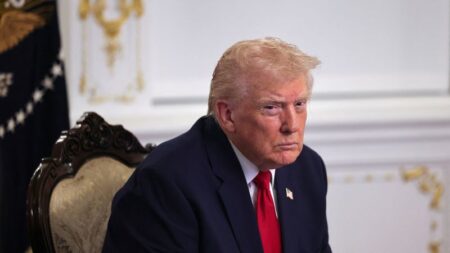



In recent months, there has been a notable shift in the approach of President Donald Trump towards domestic law enforcement, specifically by contemplating the deployment of military forces on U.S. soil. This sentiment has been building for quite some time, as evidence suggests that Trump appears to have been seeking opportunities to justify military intervention within the country. The implications of such a move raise serious constitutional concerns and reflect a profound departure from traditional practices in American governance.
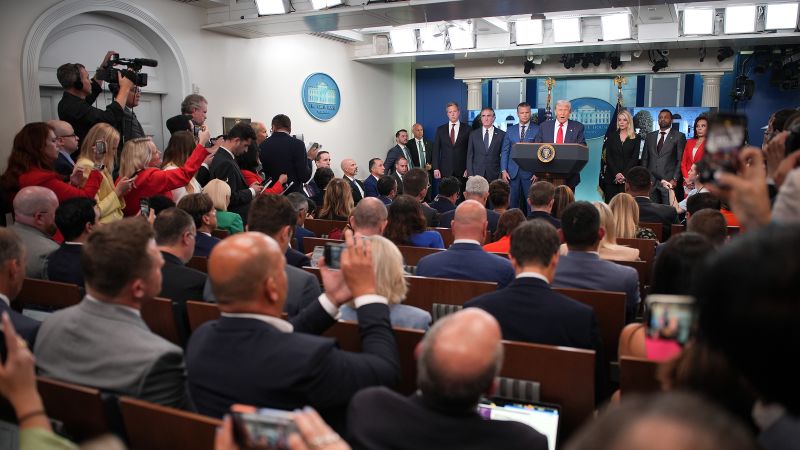
On a Monday not too long ago, President Trump announced that he would place the Washington, D.C. Metropolitan Police Department under federal control while also deploying the National Guard to combat crime in the capital. Both of these actions are alarming in their nature: the first represents an unprecedented federal takeover of local law enforcement, while the latter, although having precedents in previous administrations under specific circumstances, suggests a troubling normalization of military involvement in domestic order. Critics argue that while some historical examples of deploying the National Guard do exist, the current context, which seemingly lacks the severity of previous tumultuous events like riots or widespread civil disorder, does not justify such drastic measures.
Trump’s justification for these actions revolves around his assertion that crime in D.C. is “out of control,” leveraging recent incidents of violence to bolster his claims. However, analysis of crime data reveals that violent crime in Washington, D.C. is actually trending downwards, especially when compared to data from 2023. It appears disingenuous for the President to utilize a spike in violent incidents as a pretext for military action when statistics show a significant decline over the past several years. This begs the question: if crime rates have already been decreasing, why might federal intervention be viewed as necessary at this moment, especially during the latter part of Trump’s first term?
The deployment of military personnel in domestic contexts raises critical legal and ethical questions. Top officials from Trump’s initial term have repeatedly expressed their concerns regarding his inclination to militarize domestic policing, warning that such actions risk intertwining military operations with political agendas. Historically, the invocation of military forces in civilian matters has been met with skepticism, often drawing parallels to authoritarian regimes, which critics fear Trump’s approach could potentially mirror. By deploying troops in this manner, Trump is stepping into a dangerous territory where the lines between civilian governance and military enforcement are blurred.
Notably, historical context indicates that military intervention has usually been reserved for extreme situations, such as responding to large-scale disturbances, civil rights protests, or national emergencies. Previous instances involved federalizing the National Guard to quell violent uprisings—events of significant national concern. Trump, now, is using this extraordinary measure in situations that may not warrant it, thereby setting a potentially dangerous precedent. The language used by the President suggesting the potential deployment of active-duty troops in urban areas, such as Chicago and New York, further exacerbates apprehension about the militarization of local governance and law enforcement.
Public sentiment regarding troop deployment within the U.S. reflects a growing skepticism. Polls indicated that Americans increasingly disapprove of militarization in response to civil unrest. In light of previous orders to send military forces to cities during protests, the prevailing view is that such actions exacerbate tensions rather than alleviate them. Encouragingly, many citizens believe that military involvement in civilian policing undermines the very democratic values that the United States endeavors to uphold.
The underlying concerns surrounding Trump’s actions are not solely about immediate public safety, but rather the long-term consequences of normalizing military involvement in peaceful domestic matters. As this trend progresses, the fundamental moral and constitutional questions surrounding the limits of presidential power in mobilizing the military domestically should give all Americans pause and should foster a robust dialogue regarding the balance of power between federal authority and local autonomy. Trump’s continued assertions about the necessity of military intervention in domestic issues may serve to reshape the dynamics of American society in ways that could ultimately redefine our understanding of civil liberties and community safety.