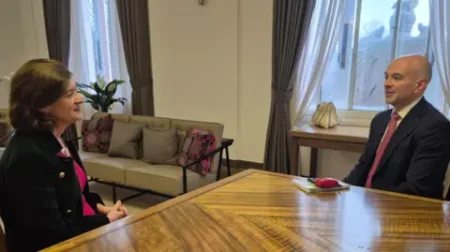


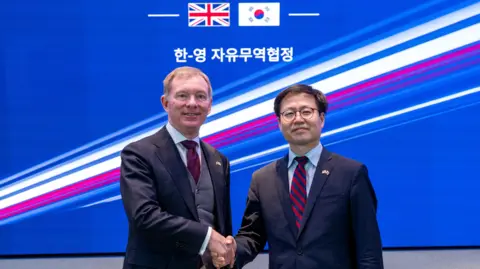
The UK and South Korea have officially finalized a significant trade agreement that is poised to yield substantial benefits for both countries. This deal, which was publicly announced by UK Trade Minister Chris Bryant and South Korea’s Trade Minister Yeo Han-koo in London, is anticipated to create thousands of jobs while injecting billions into the British economy. The reasons for optimism stem primarily from the broad access and tariff-free benefits the agreement extends to major industries across the UK, including pharmaceuticals, automotive manufacturing, and financial services.
One of the standout features of this new trade deal is the extension of tariff-free trade on the majority of goods and services. Specifically, it maintains that 98% of trade between the two nations will continue to be free of tariffs, mirroring the terms already in place between South Korea and the European Union. This is particularly relevant given that the previous agreement was due to expire in early 2026. According to government estimates, the updated agreement effectively safeguards approximately £2 billion worth of UK exports from future tariff increases. Such protection is crucial for maintaining competitive pricing and market presence in South Korea.
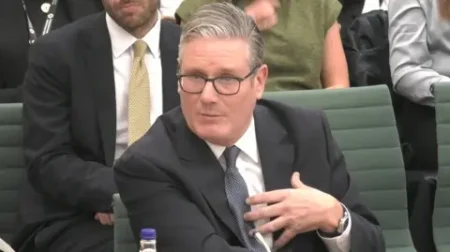
Prime Minister Keir Starmer celebrated the announcement as a “major victory for British business” and asserted that the deal would facilitate economic growth and job creation across the UK. Furthermore, Minister Bryant emphasized in his statements that the agreement has been designed to offer robust protections for key British industries, aligning with the government’s broader “Plan for Change” aimed at economic revitalization. Starmer’s endorsement highlights the government’s commitment to propelling national economic interests while deepening bilateral trade relations.
The importance of South Korea as a trading partner for the UK is further evidenced by its ranking as the 25th largest, accounting for about 0.8% of the UK’s total trade in a recent twelve-month period. Interestingly, during this same timeframe, figures revealed a decline in trade levels between the two nations, with UK exports falling by 16.4% and imports from South Korea decreasing by 10.8%. Despite these figures, Minister Yeo reassured the public that the economies of South Korea and the UK complement each other well, suggesting that the recent declines in exports do not undermine the significance of their trading relationship.
In the backdrop of the announcement, the rise of South Korean culture in the UK—ranging from music to cosmetics—has also contributed to the growing interest in enhancing trade relations. This cultural infusion highlights a more interconnected relationship that extends beyond mere economic exchange.
In terms of specifics, the deal is expected to benefit not just large corporations but small businesses as well, with the government stressing that it will cut red tape and help create a more favorable business environment. However, concerns persist regarding the long-term impact of trade deals on the UK economy. The Office for Budget Responsibility (OBR) has presented doubts regarding the prospective economic boost from recent trade agreements, noting minimal GDP growth projections through 2030 from deals made with larger trade partners like India.
Nevertheless, various UK companies have expressed positive sentiments regarding the trade deal with South Korea. Major players in the automobile industry, like Bentley Motors and Jaguar Land Rover, have underscored the significance of maintaining access to the South Korean market. Representing the spirits industry, Diageo and the Scotch Whisky Association noted the critical value of the South Korean market for their products, reinforcing the notion that reduced trade barriers will enhance opportunities for British exports in that region.
In conclusion, the newly struck trade agreement between the UK and South Korea represents a pivotal moment in post-Brexit trade strategy. While the immediate outcomes foster optimism, it remains to be seen how effective this deal will be in countering the declines observed in trade and whether it will ultimately lead to the projected economic uplift promised by the government.