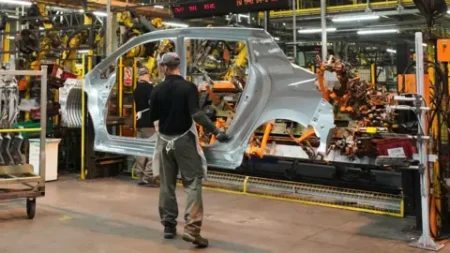



The recent reports regarding the electric car production landscape in the United Kingdom indicate a significant downturn that has raised many eyebrows within the automotive sector. According to the Society of Motor Manufacturers and Traders (SMMT), UK car output experienced a considerable decline in October, with over 14,000 fewer vehicles produced compared to the same period last year. This sharp drop is primarily attributed to a decrease in exports, reflecting a weak demand from international markets.
Notably, the output of electric and hybrid vehicles took a substantial hit, plummeting by a staggering one-third year-on-year. Factors contributing to this decline include a slowdown in demand from Europe, as well as the retooling of factories to accommodate new models. Such transitions in manufacturing processes can often disrupt the supply chain, leading to temporary reductions in production levels, which seems to be the case here.
Adding to the challenges faced by the UK automotive sector, Stellantis, the parent company of Vauxhall, announced plans to close its van-making factory in Luton. This decision underscores the pressures imposed by the UK’s rigorous regulations aimed at expediting the shift towards electric vehicles. Such measures, though aimed at promoting sustainability, can paradoxically lead to job losses and reduce overall production capacities, demonstrating the careful balance needed in transitioning to greener technologies.
In parallel with Stellantis’s announcement, Ford also declared that it would be slashing 800 jobs over the next three years due to the challenging economic landscape defined by fierce competition and declining demand for electric vehicles (EVs). The Chief Executive of SMMT, Mike Hawes, voiced the collective anxiety felt within the industry, stating that these are worrying times with the extensive investments in new plants and zero-emission products now facing immense pressure.
Despite the bleak manufacturing statistics, it’s noteworthy to mention that sales of electric cars in the UK showed an upward trend in October. The data suggests that one out of every five cars registered during this month was electric. Yet, industry insiders emphasize that this increase is predominantly fueled by unsustainable discounting practices rather than a genuine recovery in consumer appetite for EVs.
Compounding the situation is a growing contention between the UK government and automotive manufacturers regarding the timeline for phasing out new petrol and diesel vehicles. Under the current zero-emissions mandate, automakers are required to sell a specific percentage of non-emitting cars and vans to adhere to the stringent targets set ahead of the impending 2030 ban on new petrol and diesel sales. For the year 2024, the mandate is that 22% of a carmaker’s sales must consist of electric vehicles, alongside a 10% requirement for vans, with expectations for these targets to escalate further.
Firms that fail to meet these mandates face a hefty penalty of £15,000 for each vehicle sold that does not comply. However, they do have the option to purchase “credits” from other manufacturers who manage to stay within the requirements. The urgency of these compliance challenges prompted Business Secretary Jonathan Reynolds to announce a “fast track” consultation concerning how these EV targets will be enforced.
Despite the overarching push for a transition to electric vehicles, Reynolds reaffirmed the Labour Party’s commitment to adhering to the 2030 phase-out deadlines for new petrol and diesel vehicle sales. Hence, while there are signs of resistance and pressure from within the industry, the policy framework continues to lay the groundwork for a future that mandates greener vehicles, highlighting the ongoing struggles within the UK automotive industry as it navigates the complexities of this transition.