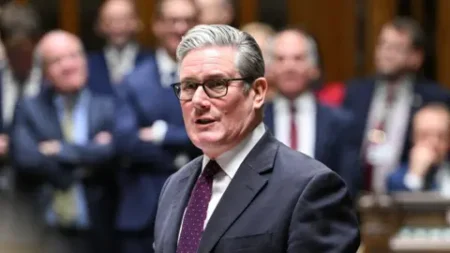




During a recent press conference at the G20 summit in Rio de Janeiro, Brazil, Prime Minister Sir Keir Starmer reaffirmed the United Kingdom’s unwavering support for Ukraine amidst escalating nuclear threats from Russia. He described the Kremlin’s statements on nuclear weaponry as “irresponsible rhetoric,” emphasizing that such claims would not deter the UK’s commitment to aiding Ukraine in its conflict against Russian aggression. This steadfast assurance comes during a period of heightened military activity, as Ukraine has recently utilized US-supplied longer-range missiles to strike targets within Russian territory. This escalation follows the United States granting Ukraine permission to launch such attacks, indicating a significant shift in military engagement.
The timing of the Prime Minister’s comments is crucial, as they come shortly after Russian President Vladimir Putin announced modifications to Russia’s nuclear doctrine. These changes detail new conditions that could prompt Russia to consider the use of its nuclear arsenal, particularly in response to strikes initiated by non-nuclear states that receive support from nuclear powers like the United States. This emerging nuclear strategy raises concerns among global leaders regarding the potential for increased hostilities and the implications for international security.
During the G20 summit, Starmer assured attendees that the United Kingdom would ensure Ukraine has the necessary resources to continue its defense efforts “for as long as needed.” His commitment underscores the UK’s role in supporting Ukraine during its ongoing conflict, which has now reached a significant milestone at 1,000 days of war. The Prime Minister articulated the need for sustained British leadership, especially as global challenges mount. He urged for an end to the conflict and a withdrawal of Russian forces from Ukrainian territory, positioning the UK as a steadfast ally in the defense of democratic values.
While speaking to journalists, Starmer was questioned about the potential necessity for the UK to prepare for nuclear war, given the current climate of threats from Russia. He firmly stated that the “irresponsible rhetoric” emanating from the Kremlin would not alter the UK’s strategic approach or diminish its resolve to support Ukraine. His remarks highlight the UK government’s commitment to remaining united with its allies and ensuring that Ukraine receives the military backing it requires to fend off ongoing Russian aggression.
Sir Keir further highlighted Putin’s absence from the G20 for three consecutive years, indicating a self-imposed isolation that stemmed from his actions. This absence symbolizes a significant diplomatic divide, as many nations confront the challenges posed by Russia’s foreign policy and military maneuvers. In addition to reaffirming military support, the UK has supplied advanced weaponry to Ukraine, including Storm Shadow missiles, although officials have remained reticent about the operational details of these arms in relation to Ukraine’s broader military strategy.
As the conflict progresses, the implications of Russia’s nuclear doctrine adjustments remain a topic of international concern. World leaders grapple with the need for a cohesive response to Russia’s military posturing while balancing the risks associated with further escalation. Sir Keir Starmer’s declarations at the G20 serve not only to reinforce the UK’s commitments but also to send a message of unity among nations in support of Ukraine, emphasizing that threats of nuclear conflict will not intimidate or fracture Western alliances. The Prime Minister’s stance reflects a broader sentiment among allied nations: a resolute determination to counter Russian aggression and uphold the principles of sovereignty and territorial integrity in the face of unprecedented challenges.