


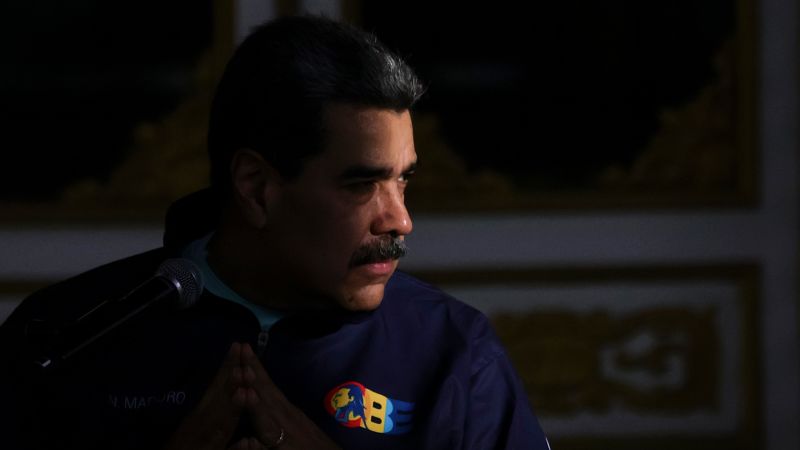
The decision made by the Trump administration regarding Venezuela marks a significant milestone in U.S. foreign policy, particularly regarding Latin America. The administration’s move to designate Venezuelan President Nicolás Maduro and his government associates as members of a foreign terrorist organization could commence as early as Monday, thereby expanding the United States’ authority to take punitive actions. This designation may facilitate the imposition of further sanctions aimed at targeting Maduro’s assets and governmental infrastructure. However, it must be noted that, according to legal experts, this designation does not provide explicit authority for lethal military action against individuals associated with the Venezuelan government.
The term “Cartel de los Soles” has been coined to describe what some experts believe to be more of an informal network of corrupt Venezuelan officials rather than a traditional organized crime group. This label implicates a decentralized alliance within the Venezuelan armed forces that is allegedly involved in drug trafficking activities. President Maduro has consistently denied any direct involvement in narcotics trafficking, asserting that his regime has never acknowledged the existence of a cartel in a conventional sense, a contention that some experts debate as being technically accurate.
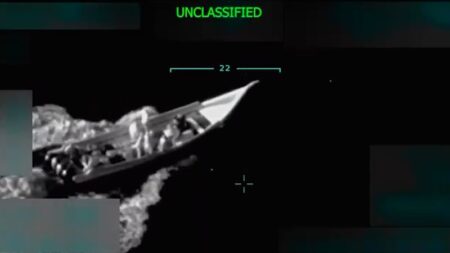
The announcement regarding this designation was made on November 16, coinciding with a substantial military buildup in the region by the U.S. The Pentagon has mobilized over a dozen warships and up to 15,000 troops, a mission coded as “Operation Southern Spear.” Incidents have already occurred in which U.S. military operations have resulted in multiple fatalities due to strikes targeting drug trafficking suspects from maritime vessels.
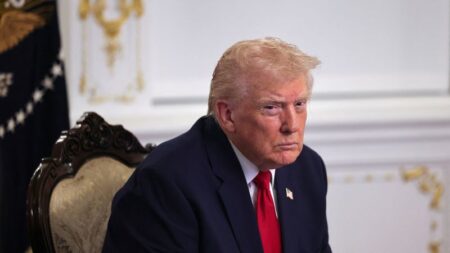
Amid heightened military readiness, President Trump has received briefings detailing various options available for potential action within Venezuela. These options include military strikes on strategic government or military installations as well as covert operations. Nonetheless, the administration also maintains the possibility of taking no further action and opting for a more diplomatic approach.
As tensions escalate in the region, General Dan Caine, the Joint Chiefs of Staff chairman, and his senior enlisted advisor, David Isom, are scheduled to visit Puerto Rico to express gratitude to U.S. service members who are engaged in operations across the Caribbean Sea. Such gestures underline the U.S. commitment to maintaining regional security, although public sentiment appears to trend against military intervention in Venezuela. According to a CBS News/YouGov poll, a striking 70% of Americans oppose U.S. military action in Venezuela, while 30% support it. Moreover, a significant number of respondents—76%—believe that the Trump administration has not adequately clarified its military objectives regarding Venezuela.
Interestingly, the official narrative from Washington emphasizes the need to curb illegal migration and narcotics trading, with regime change being an ancillary goal. The administration appears to intend to leverage economic pressures in hopes that they will compel President Maduro to resign without necessitating direct military intervention. President Trump has seemingly opened a door for diplomatic discussions, stating last week that Maduro “would like to talk” and expressing willingness to engage in negotiations “at a certain time.”
The White House, however, has not yet provided any substantial updates on whether a conversation between President Trump and Maduro is likely. Meanwhile, tensions have been visibly escalating, highlighted by the most significant show of military strength near Venezuela to date. Multiple U.S. aircraft, including F/A-18E fighter jets and B-52 strategic bombers, were spotted operating off the Venezuelan coastline, indicating a readiness to respond.
In a further signal of George W. Bush era preparedness, three major international airlines suspended their flights to and from Venezuela after the U.S. Federal Aviation Administration (FAA) issued warnings about the risks associated with flying over Venezuelan airspace. This developing situation may indicate a pivotal moment not only for Venezuelan-U.S. relations but also for the broader geopolitical climate in Latin America. As updates continue to unfold, observers remain watchful of both the implications of U.S. actions and the responses of the Maduro government.
In conclusion, as tensions mount, the geopolitical landscape surrounding Venezuela evolves continuously, reflecting deep-seated issues involving narcotrafficking, governance, and international relations. The upcoming decisions by the Trump administration, whether military or diplomatic, will likely shape the future of U.S.-Venezuela interactions for the foreseeable future.