

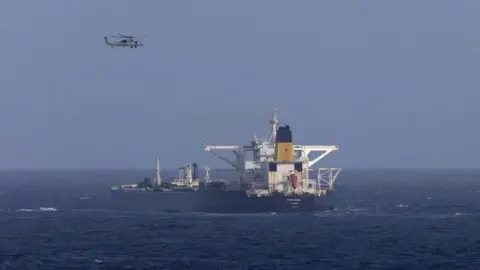
The ongoing tensions between the United States and Venezuela have intensified, with the U.S. Coast Guard recently declaring an “active pursuit” of a third oil tanker linked to Venezuela in international waters. This development comes on the heels of two other oil tankers being seized earlier this month, with one taken over the weekend. The rising conflict reflects a significant deterioration in U.S.-Venezuelan relations, previously characterized by heavy sanctions and strong accusations from both sides.
The latest vessel pursuit is reportedly a “sanctioned dark fleet” ship that has been implicated in Venezuela’s reputed evasion of international sanctions. A U.S. official provided details to CBS News, indicating the vessel is flying a false flag and is under a judicial seizure order. Washington has accused the Venezuelan government of leveraging oil funds to support drug-related criminal enterprises, while Venezuelan authorities have labeled these seizures as acts of “theft and kidnapping,” further escalating the rhetoric between the two countries.
Notably, a whirlwind of recent activity has taken place, including U.S. President Donald Trump’s order for a blockade against sanctioned oil tankers entering and exiting Venezuela. The country, which possesses the largest proven oil reserves globally, has reacted vehemently to this maneuver, accusing the Trump administration of attempting to pilfer its resources. So far, U.S. authorities have withheld confirmation regarding the specifics of the third vessel pursuit and have not publicly disclosed the name or exact location of the ship in question.
As of last week, data compiled by TankerTrackers.com indicated that out of approximately 80 vessels either currently in Venezuelan waters or en route, more than 30 are under U.S. sanctions. This potency of sanctions strikes at the heart of Venezuela’s economy, which relies heavily on income derived from oil exports to support government budgets. The implications are dire given the country’s financial struggles and the sociopolitical upheaval currently affecting its citizens.
The maritime confrontation included the seizure of a Panamanian-flagged tanker by a specialized tactical team in international waters. While this vessel was reportedly not listed among U.S. sanctioned ships, it was suspected of transporting “sanctioned PDVSA oil,” leading to its boarding. Historical records show that the ship has sailed under flags of different nations, including Greece and Liberia, complicating its international status and legality.
The Venezuelan government has responded angrily to these incidents, issuing a stern warning that such acts would not go without repercussions. It announced intentions to escalate the situation by filing complaints with the United Nations Security Council and other related multilateral organizations. The duality of grievances reveals a profound divide: while the U.S. frames its sanctions as a moral and legal necessity to combat drug trafficking, Venezuela accuses the U.S. of imperialistic behavior aimed at exploiting its resources.
Further complicating these international relations, U.S. military presence in the Caribbean has been notably heightened, leading to lethal strikes against alleged Venezuelan drug-smuggling operations. At least 100 people were reportedly killed in these operations, drawing scrutiny from Congress regarding the efficacy and legality of such military actions. Notably, Secretary of State Marco Rubio underscored the urgent need for change concerning the status quo with the Venezuelan regime, corroborating the administration’s hawkish stance against Nicolás Maduro’s government.
Venezuelan officials, including Maduro himself, have firmly denied allegations linking the regime to drug trafficking, asserting that claims from U.S. authorities remain unfounded. This narrative clash has ignited concerns about potential regime change orchestrated by U.S. interests, a topic met with criticism from Venezuelan diplomats who perceive it as a grievous violation of their sovereignty.
In conclusion, the maritime confrontations over oil tankers reflect more than mere economic disputes; they are emblematic of a broader geopolitical struggle marked by accusations, military maneuvers, and deeply entrenched hostilities that seem unlikely to abate in the near future. Both nations remain firmly entrenched in their positions, suggesting that the complexities of U.S.-Venezuelan relations will continue to evolve against a backdrop of power dynamics and global interests.