


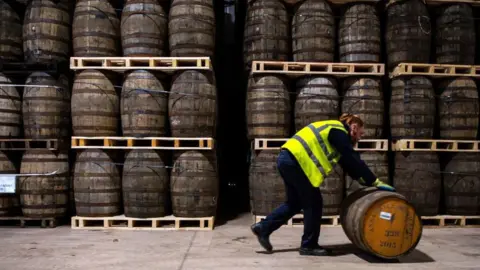
The whisky industry, particularly Scotch whisky production, is currently experiencing a significant downturn as it grapples with challenging global market conditions. This situation has been exacerbated by recent U.S. tariffs, which were originally instituted under the Trump administration. These tariffs added a substantial 10% to the costs faced by importers, severely impacting sales in what is considered the industry’s most important export market—the United States.
The concerns surrounding Scotch exports do not end with the current tariffs. There are looming threats of further tariff increases, as American tariffs on single malts—whiskey varieties that command premium prices—are set to resume next spring, with an added burden of a potential 25% charge if negotiations do not yield favorable results. The implications of these tariffs on single malts, which have traditionally been a vital component of Scotch exports to the U.S., are troubling.
Moreover, the downturn is not isolated to the American market; it is reflective of broader global trends. Weaker consumer spending in various markets is influenced by constrained economic growth, alongside rising taxes and production costs driven by factors such as new packaging regulations. The effect is evident; shipments to China, for instance, have plummeted by 31%, resulting in a drop from being the fifth largest market for Scotch to the tenth. Although the first half of the current year saw a 1% increase in the value of Scotch exports, totaling £2.5 billion, the actual volume saw a decline of nearly 4%.
The repercussions of U.S. tariffs may take some time to fully materialize, as many distillers preemptively built stocks in the United States prior to the tariffs taking effect. As distillers scramble to adapt to such economic pressures, suppliers to the whisky industry, especially those dealing in malted barley, are also feeling the adverse effects. Contract demands for barley are expected to decrease significantly, with projections suggesting a drop from a range of 900,000 to 1 million tonnes down to 600,000 to 700,000 tonnes. Such declines place farmers in a precarious position, with many opting to grow other crops as contracts for barley become difficult to secure.
Jack Stevenson, chair of the crop committee for the National Farmers Union in Scotland, has expressed the dire situation facing grain farmers, particularly with large buyers finding it tough to place orders. The industry averages a break-even price above £200 per tonne for barley, yet the market has seen spot prices falling to approximately £160 per tonne without pre-existing contracts. Distilling and brewing usage of barley has reportedly decreased by 14% over the past year, indicating a need for farmers to reconsider their crop rotation strategies.
Several distilleries have responded to the fluctuating demand by temporarily halting production. Diageo, the largest producer of Scotch whisky, has announced a pause in operations at its Roseisle Maltings in Moray until at least the next year, and similar measures have been taken at other facilities like Teaninich in Easter Ross and Glenmorangie in Tain, points of concern that reflect broader trends in the industry.
Amidst these operational adjustments, visitor centers within distilleries tend to remain open, implying a degree of resilience within the industry. However, the closure of smaller distilleries for extended durations raises concerns about supply chains and the continued viability of businesses reliant on consistent demand.
As the industry forecasts a long-term decline in demand due to macroeconomic factors, including geopolitical volatility and consumer uncertainty, the Scotch whisky sector is left grappling with how to sustain its market position amid these challenges. While potential tariff reductions for markets like India offer a glimmer of hope, the overall landscape for Scotch whisky remains fraught with uncertainty as suppliers and manufacturers weigh their options in adapting to these turbulent conditions. The implications extend beyond distillers themselves, impacting everyone from barley farmers to those in hospitality—underscoring the intricate dependencies within the whisky supply chain.